When I tell people I work on Syria, the reaction has changed over the past two years. It used to be sympathy. Now it is more often a question: isn’t it over?
The fall of the Assad regime in December 2024 changed a great deal. Humanitarian access has improved. Violence has fallen and sanctions have eased, and “hope” has crept back into people’s lives. A miracle that no one expected!
More than 3.4 million refugees and internally displaced people returned home in 2025 – but returning is not the same as recovering. An estimated 16.7 million people need humanitarian assistance this year. Many families are going back to damaged homes, unreliable electricity and water, and no schools nearby. Others cannot go back at all.
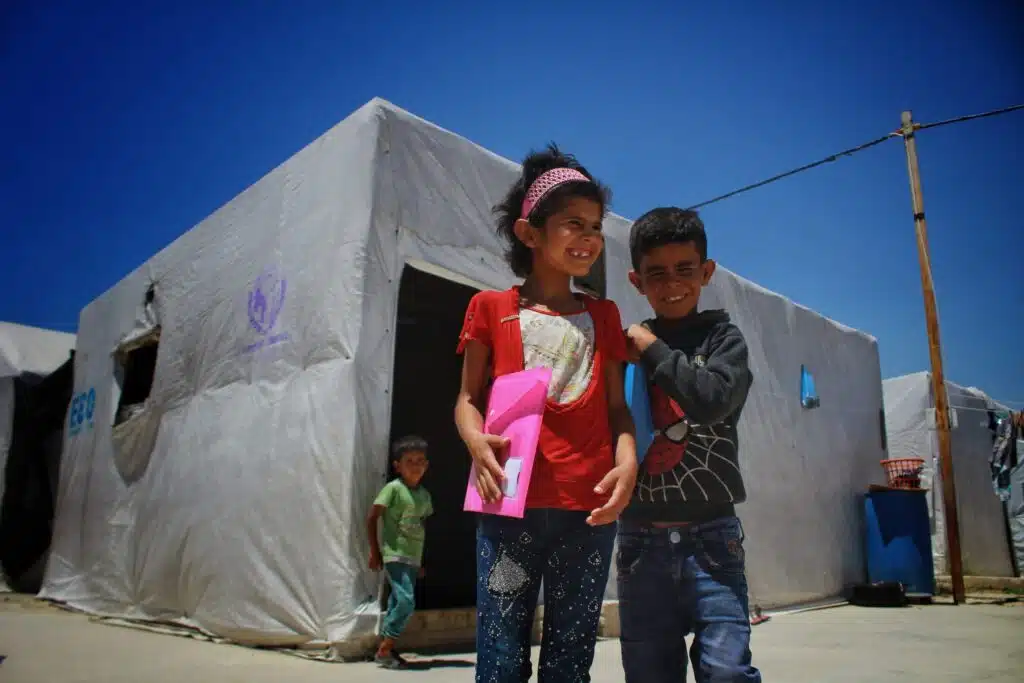
Children carry much of this burden. Over 2 million children are still out of school, and 1.6 million more are at risk of dropping out because of damaged infrastructure, poverty and displacement. Explosive remnants of war are a constant danger: nearly 1,000 incidents have been recorded, with hundreds of children killed or injured.
All of this comes just as support is shrinking. In May, the World Food Programme had to halve its emergency food assistance. And, this year’s UN response plan for Syria is only around 30 percent funded.
Beyond the figures, Syria is building new institutions while managing deep mistrust between communities, some of it sharpened by recent violence. Recovery will be uneven, and it will take years.

Their hope is concrete. It is in families who choose to rebuild rather than wait. It is in teachers, doctors and volunteers who kept services running through the worst years and can now work in the open. And, it is in young people who want to stay and build their future at home.
Action Syria works with local partners to make sure Syrian communities have the medical care and education they need, every day and when emergencies strike. For us, localisation is not a slogan. It is simply the most effective way to help.
Local organisations know their communities’ needs best because they share them. Many stayed through the war, often reaching people international agencies could not. They run on modest budgets, so more of every pound reaches the people it is meant for. And, they answer directly to the families they serve –people they see every day.
There is a further reason, and for me a more personal one. Recovery is not only about buildings and services. It is about rebuilding trust: between neighbours, between communities, and between people and the institutions meant to serve them. A school or clinic run by the community, for the community, becomes part of that work. For children especially, a safe classroom with a familiar teacher is where the next Syria begins.
After fifteen years of appeals, it is natural to feel tired. Urgent crises compete for attention, and it can be hard to see what your support has changed. With the conflict over, some people reasonably wonder whether the need in Syria has passed.
My answer is that recovery is when support matters most, and it is also when support is most often withdrawn. A family that returns to find no school and no clinic faces hard choices. They may leave again. Their children may go to work instead of to class. The gains of the past two years are real but fragile, and they will last only if the basics are in place.
There is also something new. For the first time in more than a decade, giving to Syria can be about rebuilding, not just surviving. Steady support for local initiatives is how emergency relief becomes lasting change.

If you have supported Syrian communities before, thank you. Your support carried people through years when the world looked away. If you have stepped back, I ask you to consider returning now, when it can make the most difference. And if you are new to this, welcome – together we are making a real difference.
Regular giving, even in small amounts, matters most. It lets our partners plan a school year, not just a week.
Syrians are doing the hard work of rebuilding. What they ask of us is that we stay alongside them while they do it.
Written by Mazen Gharibah, Action Syria Trustee
Mazen is from Homs, Syria, and brings extensive knowledge of the Syrian conflict.
He is a researcher at LSE’s Conflict & Civil Society Research Unit, a fellow at LSE’s Middle East Centre and a lecturer on governance, development and public policy. Previously he was an Executive Director at the Syrian British Consortium, and a member of the UN-backed Syrian Constitutional Committee.
Behind the scenes, Mazen claims to be an “excellent Syrian chef”, specialising in his grandmother’s recipes.

Keeping supporters clued up on our work is important to us. Sign up to keep up to date with where the funds go and the impact they have, and how you can support us.
